Minimalist Interiors Elevated by Natural Stone
Minimalist interiors are often misunderstood as empty or austere. In reality, successful minimalism relies not on the absence of elements, but on the quality and intention behind the few that remain. In this context, natural stone plays a critical role — replacing decoration with material presence.
Rather than adding visual layers, stone introduces depth through texture, scale, and authenticity. Marble islands, stone walls, and sculptural vanities allow designers to reduce objects while enriching space. In luxury minimalism, stone becomes the element that carries meaning without excess.
Minimalism Beyond Emptiness
Minimalist design is not defined by what is removed, but by what is chosen.
In high-end interiors, minimalism demands materials that can stand on their own. Artificial surfaces and decorative accents often fail in restrained spaces because they rely on repetition or embellishment. Natural stone, by contrast, introduces variation, movement, and tactile depth without requiring additional ornament.
A single stone surface can define an entire room — visually anchoring the space while allowing everything else to remain quiet.
Marble Islands as the Center of Gravity
In minimalist kitchens, the island often becomes the focal point. When executed in natural stone, it replaces multiple design gestures with one decisive element.
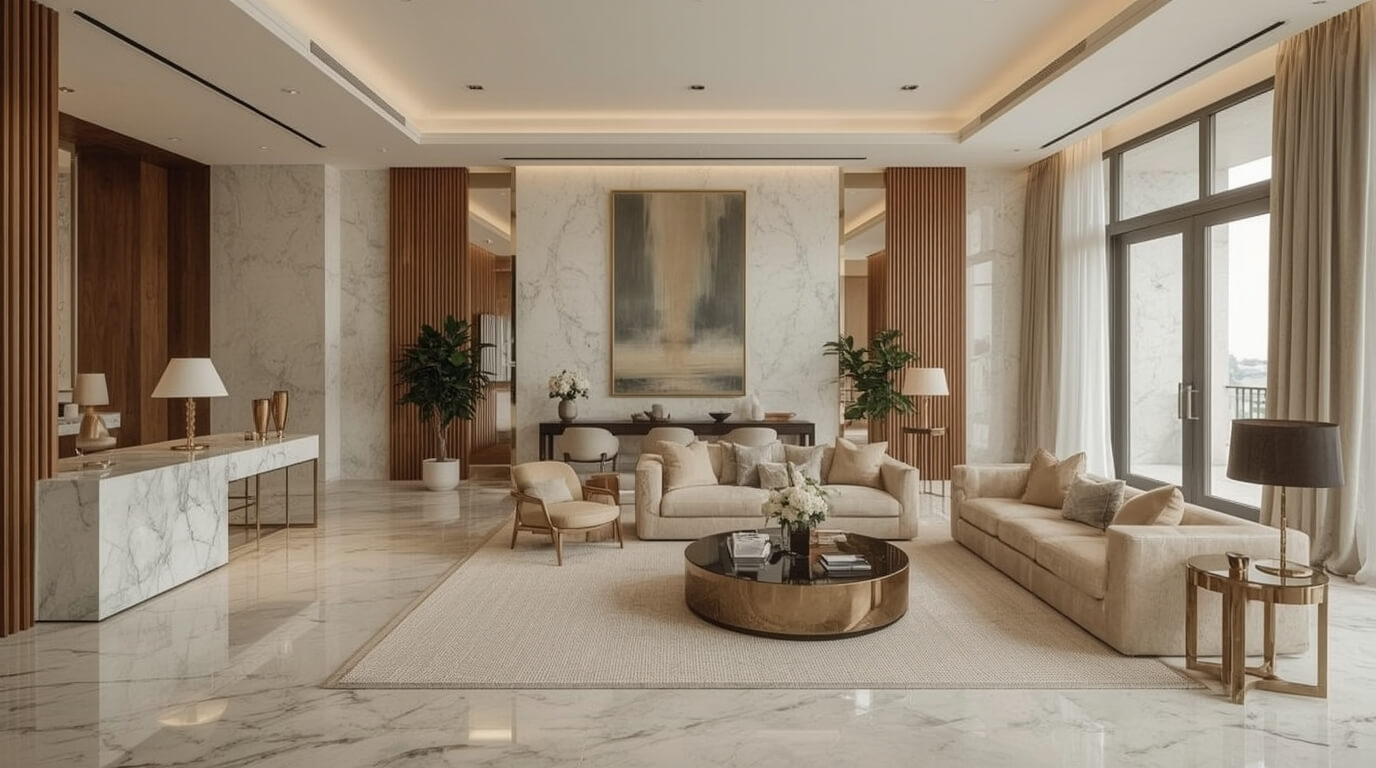
A marble island introduces mass and weight, grounding the space architecturally. Subtle veining provides movement without visual noise, while the stone’s surface reflects light in a way that enhances the room’s openness.
Rather than competing with cabinetry or fixtures, a stone island allows surrounding elements to recede. The kitchen becomes calmer, more intentional, and materially honest.
Stone Walls That Replace Decoration
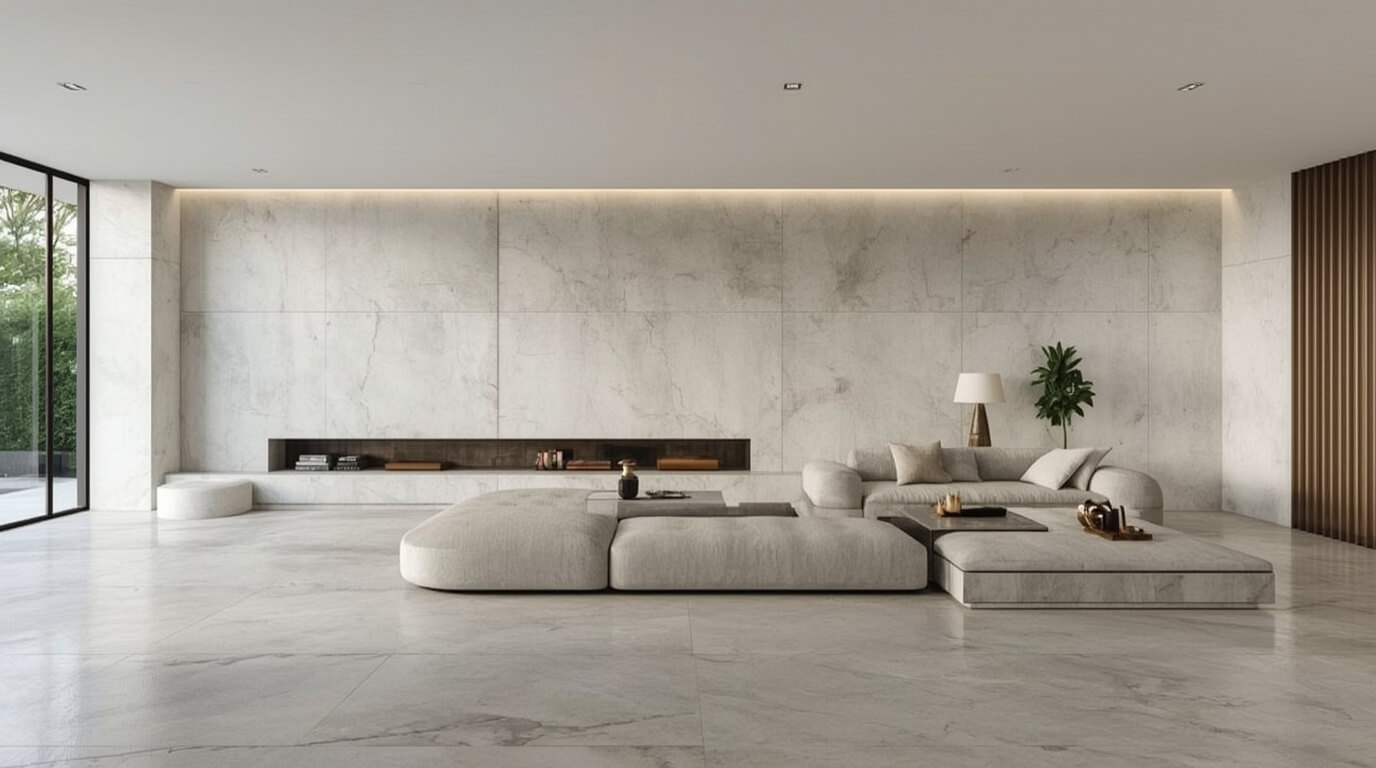
In minimalist interiors, walls are rarely neutral backdrops. When treated with natural stone, they become architectural surfaces rather than decorative finishes.
Stone walls eliminate the need for artwork, panels, or layered textures. The material itself provides scale, rhythm, and visual interest. Large-format stone slabs, especially in light marble or limestone, reinforce simplicity while adding quiet complexity.
In this way, stone walls do not decorate a space — they define it.
In minimal interiors, natural stone replaces decoration not by adding detail, but by carrying meaning through material presence.
Vanities as Sculptural Elements
Bathrooms often reveal whether minimalism is thoughtful or superficial.
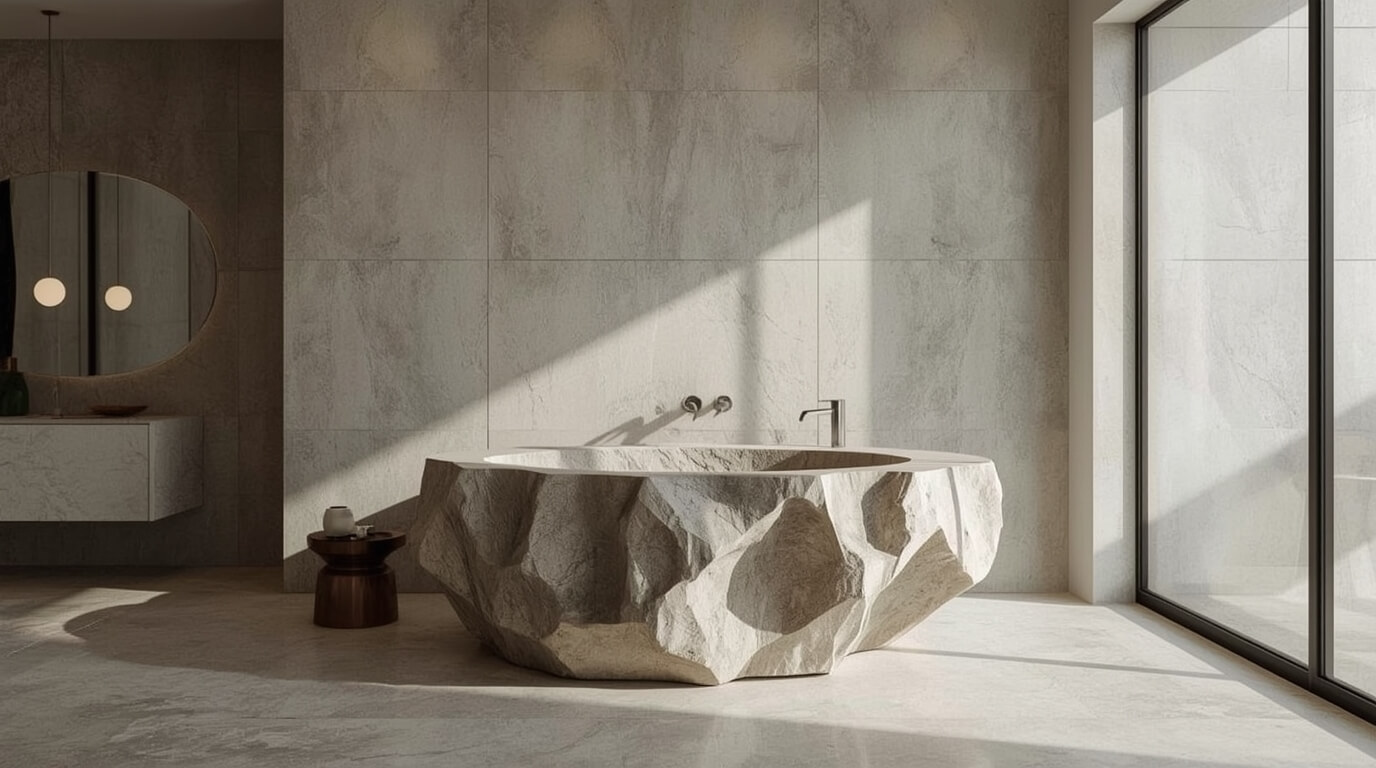
Stone vanities allow designers to reduce visual clutter while increasing spatial impact. A carved marble vanity introduces form, texture, and permanence — replacing multiple decorative elements with a single sculptural object.
In minimalist bathrooms, this approach creates balance. The space feels refined rather than sparse, intentional rather than empty. Stone provides a focal point that feels integral to the architecture, not applied afterward.
Why Stone Aligns Naturally with Minimalism
Minimalism depends on restraint, but restraint requires confidence.
Natural stone supports minimalist design because it does not rely on trends or artificial perfection. Its variations are inherent, its imperfections authentic. This allows designers to specify fewer materials without sacrificing richness.
In luxury interiors, minimalism succeeds when materials do the work that decoration once did. Stone excels in this role by offering depth, longevity, and architectural presence through simplicity.
Designing Less — Choosing Better
The most compelling minimalist interiors are not defined by how little they contain, but by how deliberately each element is chosen.
Natural stone enables designers to remove excess without losing character. Marble islands, stone walls, and sculptural vanities demonstrate that minimalism is not about absence — it is about clarity. When stone replaces decoration, space becomes quieter, richer, and more enduring.
Minimalist luxury interiors rely on materials that can replace decoration rather than require it. Natural stone elevates minimalism by introducing depth, weight, and architectural meaning — allowing designers to do less, while achieving more.