Stone as Sculpture: When Functional Elements Become Art
In contemporary luxury interiors, the line between function and art is increasingly blurred.
Natural stone has become a primary medium in this shift — not as a surface finish, but as a sculptural material capable of transforming everyday elements into architectural statements.
For architects and interior designers working in high-end residential and hospitality projects, stone is specified not only for durability or prestige. It is chosen for its ability to shape space emotionally and visually, allowing bathtubs, sinks, and fireplaces to function as focal points with artistic presence rather than purely utilitarian roles.
When Function Becomes Form
In sculptural design, function does not disappear — it is refined.
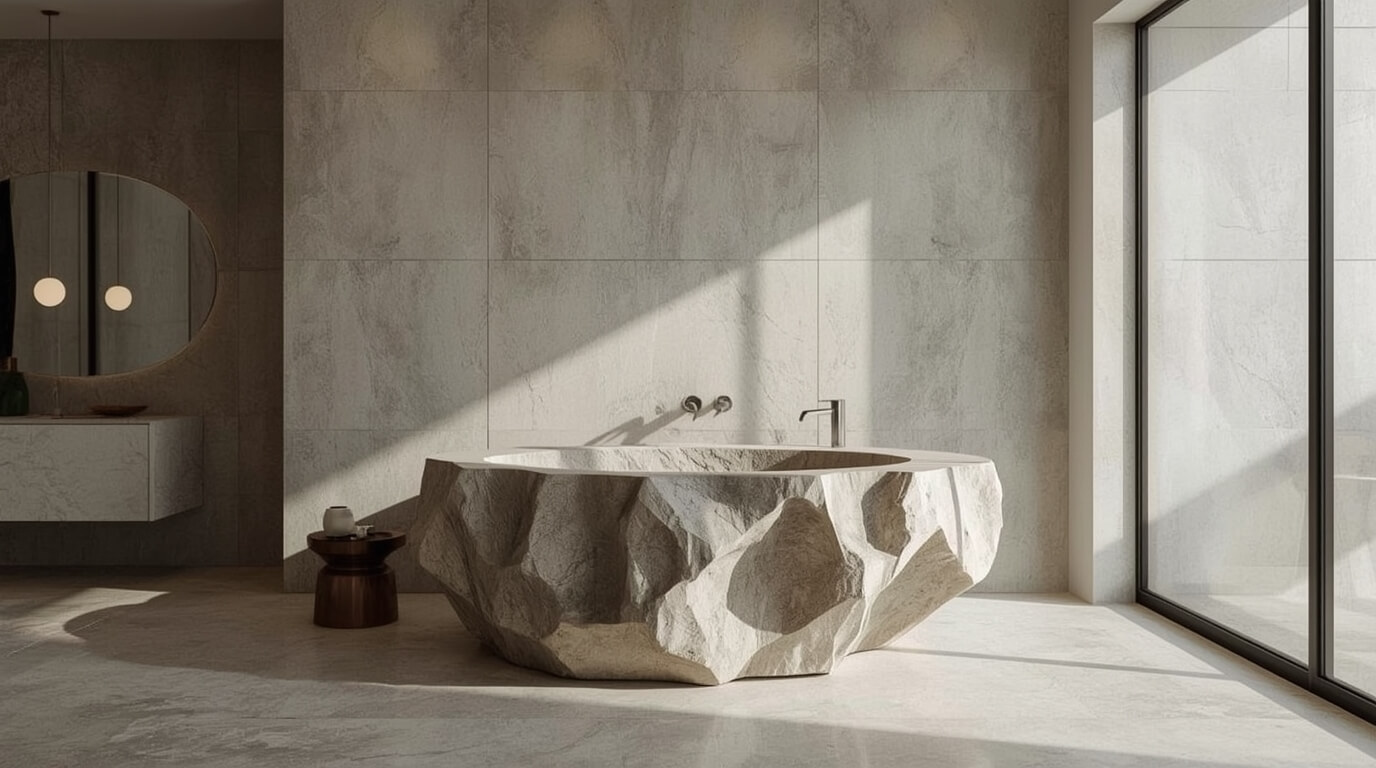
A stone bathtub carved from a single block of marble or dolomite is not merely a bathing fixture. Its mass, proportions, and surface finish define how the entire bathroom is perceived. The object anchors the space, allowing surrounding elements to remain restrained and minimal.
The same principle applies to stone sinks and basins. When treated as sculptural forms rather than plumbing components, they introduce weight, rhythm, and material honesty. The stone itself becomes the design language.
In luxury interiors, restraint amplifies impact. A single sculptural stone element can replace multiple decorative gestures.
Sculptural Stone Bathtubs as Architectural Anchors
Freestanding stone bathtubs are among the clearest examples of function elevated to art.
Unlike lightweight acrylic or composite alternatives, stone bathtubs assert physical presence. Their thickness, curvature, and surface texture communicate permanence and craftsmanship. Designers often build the entire bathroom concept around the bathtub — aligning circulation, lighting, and sightlines to reinforce its role as the centerpiece.
Natural stone allows for subtle imperfections and variations that reinforce authenticity. These nuances are not flaws; they are what distinguish sculptural objects from industrial products.
A well-proportioned stone bathtub does not compete with architecture — it becomes part of it.
Stone Sinks as Objects, Not Fixtures
In high-end kitchens, powder rooms, and boutique hospitality projects, stone sinks increasingly function as objects of visual interest.
Carved stone basins introduce a tactile quality that contrasts with flat surfaces and linear cabinetry. Whether cylindrical, oval, or asymmetrical, their form adds softness and depth without ornament.
Designers often use stone sinks to break visual uniformity in otherwise minimal interiors. The material’s natural veining and texture create movement, allowing the sink to stand alone as a sculptural element.
In this context, functionality remains essential — but it is never the only consideration.
Fireplaces Reimagined Through Stone Sculpture
Stone fireplaces have long been associated with tradition, yet contemporary sculptural approaches are redefining their role.
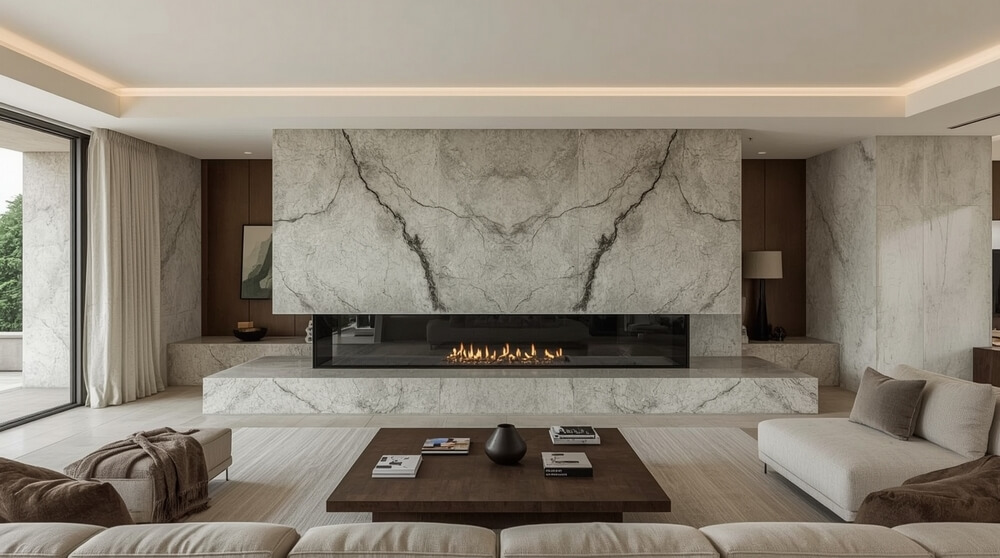
Rather than decorative surrounds, designers increasingly specify monolithic stone fireplace elements — minimal in detailing, bold in proportion. A carved stone fireplace becomes a vertical sculpture, shaping the room’s axis and establishing a sense of gravity.
Natural stone’s ability to withstand heat while maintaining visual softness makes it uniquely suited for this role. Fireplaces carved from marble, limestone, or travertine blur the line between utility and art, especially when integrated seamlessly into walls or architectural volumes.
In luxury living spaces, the fireplace often becomes a quiet focal point — powerful without being dominant.
Why Sculptural Stone Resonates in Luxury Design
Sculptural stone elements resonate with luxury clients because they communicate values beyond aesthetics.
They signal:
- craftsmanship over mass production
- permanence over trend-driven design
- individuality over standardization
Each sculptural stone object is inherently unique. No two blocks are identical, and no two carvings yield the same result. This exclusivity aligns naturally with the expectations of high-end residential and hospitality projects.
For architects and designers, sculptural stone offers a way to introduce artistry without excess — allowing material and form to speak for themselves.
Designing with Fewer Objects, Chosen Well
Luxury interiors are increasingly defined by subtraction rather than accumulation.
By treating functional elements as sculptural forms, designers can reduce visual noise while increasing spatial impact. A single stone bathtub, sink, or fireplace can replace layers of decorative detail, resulting in interiors that feel calm, intentional, and timeless.
Natural stone excels in this role because it carries depth, history, and material integrity. When shaped thoughtfully, it becomes more than a building material — it becomes art that is lived with every day.
When functional elements are treated as sculptural forms, natural stone moves beyond utility and becomes part of the architecture itself. In luxury interiors, a single, well-chosen stone object can replace layers of decoration — delivering clarity, permanence, and material depth without visual excess.