The Timeless Luxury of Natural Stone in Modern Interior Design
In the U.S. luxury interior market, natural stone is not a trend — it is a design standard.
Architects and interior designers continue to specify marble, onyx, and dolomite not for decoration, but for architectural presence, material integrity, and long-term value. In modern interiors defined by restraint and clarity, natural stone remains one of the few materials capable of elevating a space without relying on excess or ornament.
Natural Stone as an Architectural Material, Not a Finish
In high-end residential and hospitality projects, natural stone is treated as an architectural element rather than a surface finish.
Marble and onyx are selected slab by slab, with attention to veining direction, translucency, and scale. These decisions directly impact how a space reads — visually, emotionally, and materially.
For designers and architects, natural stone communicates craftsmanship and intent. It signals that the project prioritizes longevity, authenticity, and material honesty — values that define premium interiors in the U.S. market.
Why Luxury Projects Avoid Artificial Surfaces
In luxury interiors, consistency is often less important than character.
Engineered materials offer predictability, but high-end projects demand uniqueness. Natural stone provides variation, depth, and movement that cannot be replicated. Each piece is inherently one of a kind.
From a design perspective, stone interacts with light in complex ways — reflecting, absorbing, and diffusing it across the space. This dynamic quality is critical in luxury interiors, where lighting and materiality work together to shape atmosphere.
Artificial surfaces may imitate appearance, but they rarely deliver the tactile and visual depth required in premium design environments.
Natural stone elevates modern interiors not through decoration, but through material presence and architectural intent.
How Natural Stone Enhances Modern Interior Design
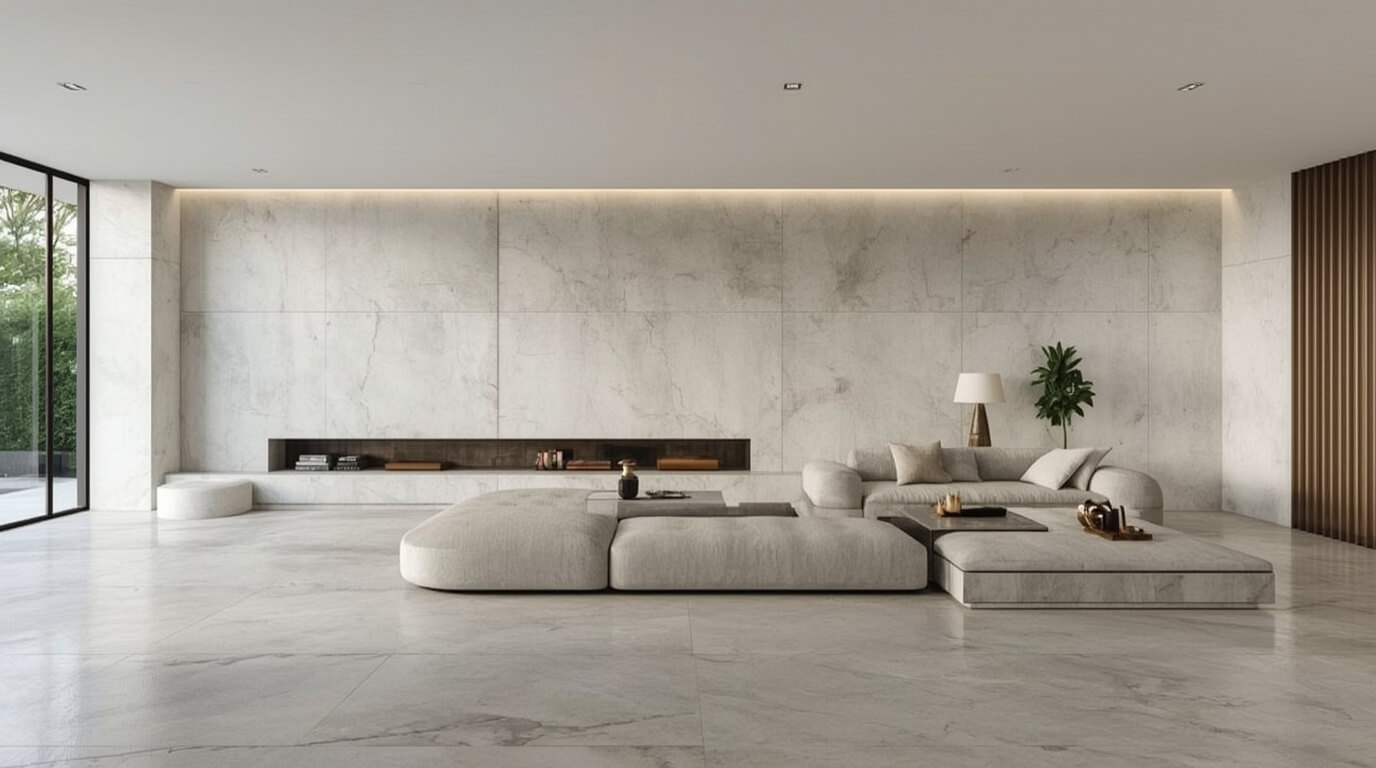
Modern interiors often rely on minimal material palettes. In this context, natural stone becomes a defining element rather than a background.
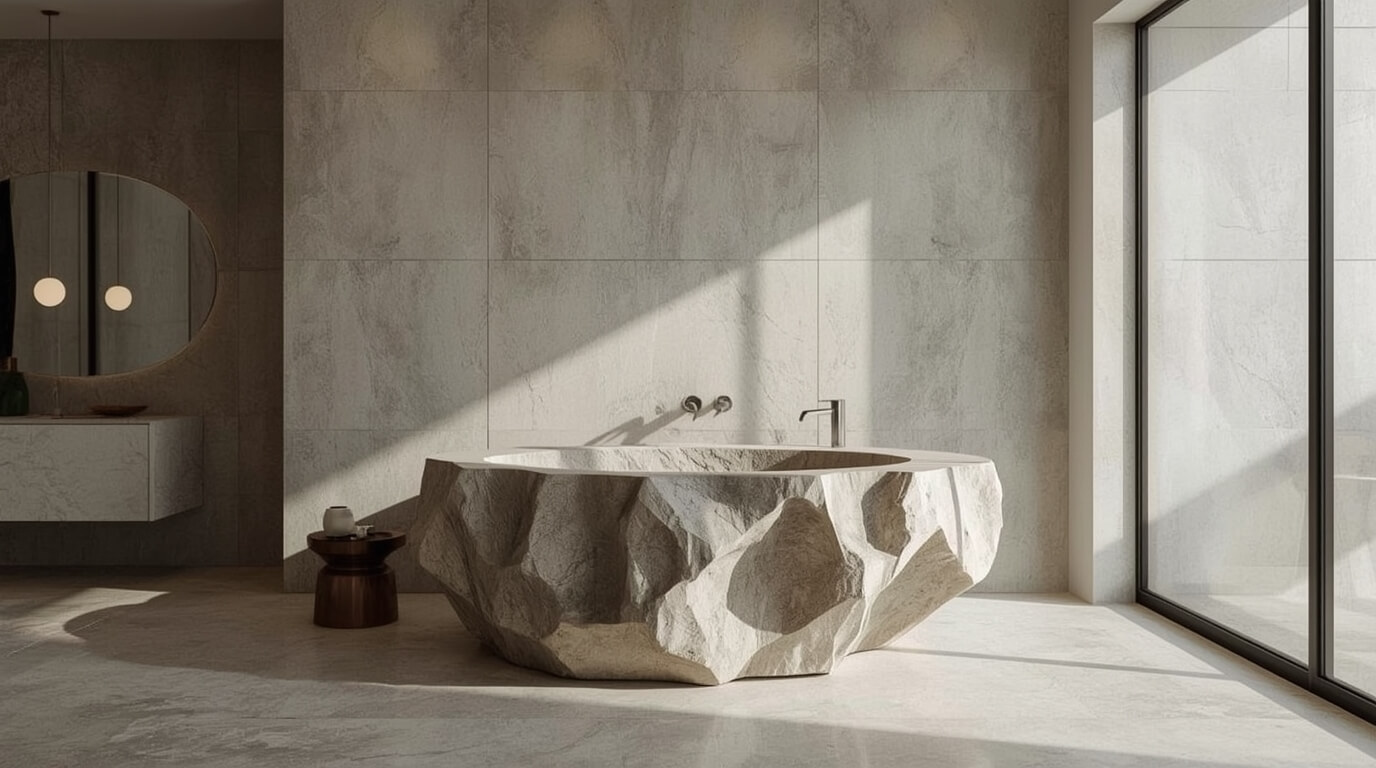
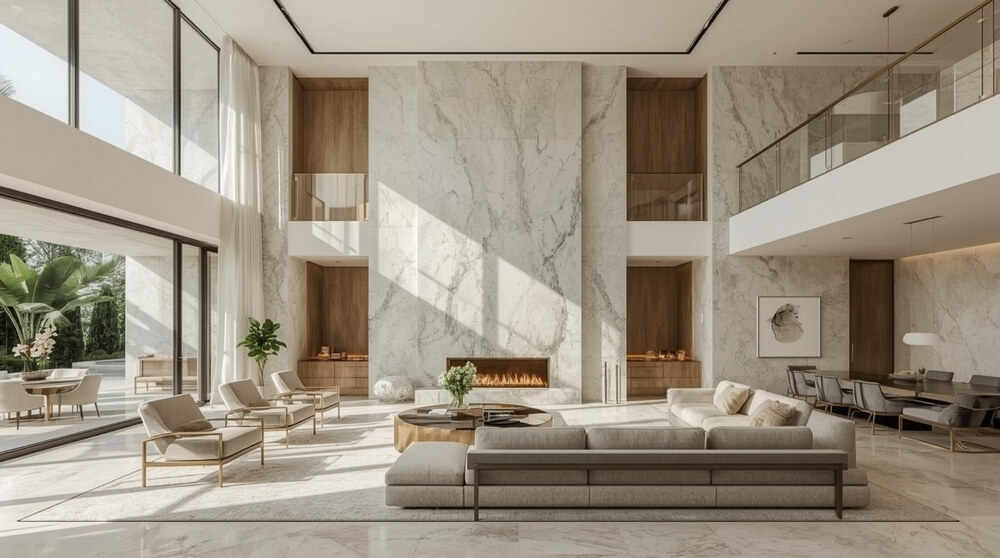
A marble island, a stone fireplace surround, or a sculptural stone sink can anchor the entire design concept. Stone introduces weight and balance, allowing designers to keep forms simple without sacrificing richness.
Light marble tones support contemporary, airy interiors, while expressive stones — such as onyx or richly veined marbles — introduce contrast and drama when used selectively.
For U.S.-based designers, stone is a tool for adding value without visual noise.
Natural Stone in Classic and Transitional Architecture
In classic and transitional interiors, natural stone reinforces architectural continuity.
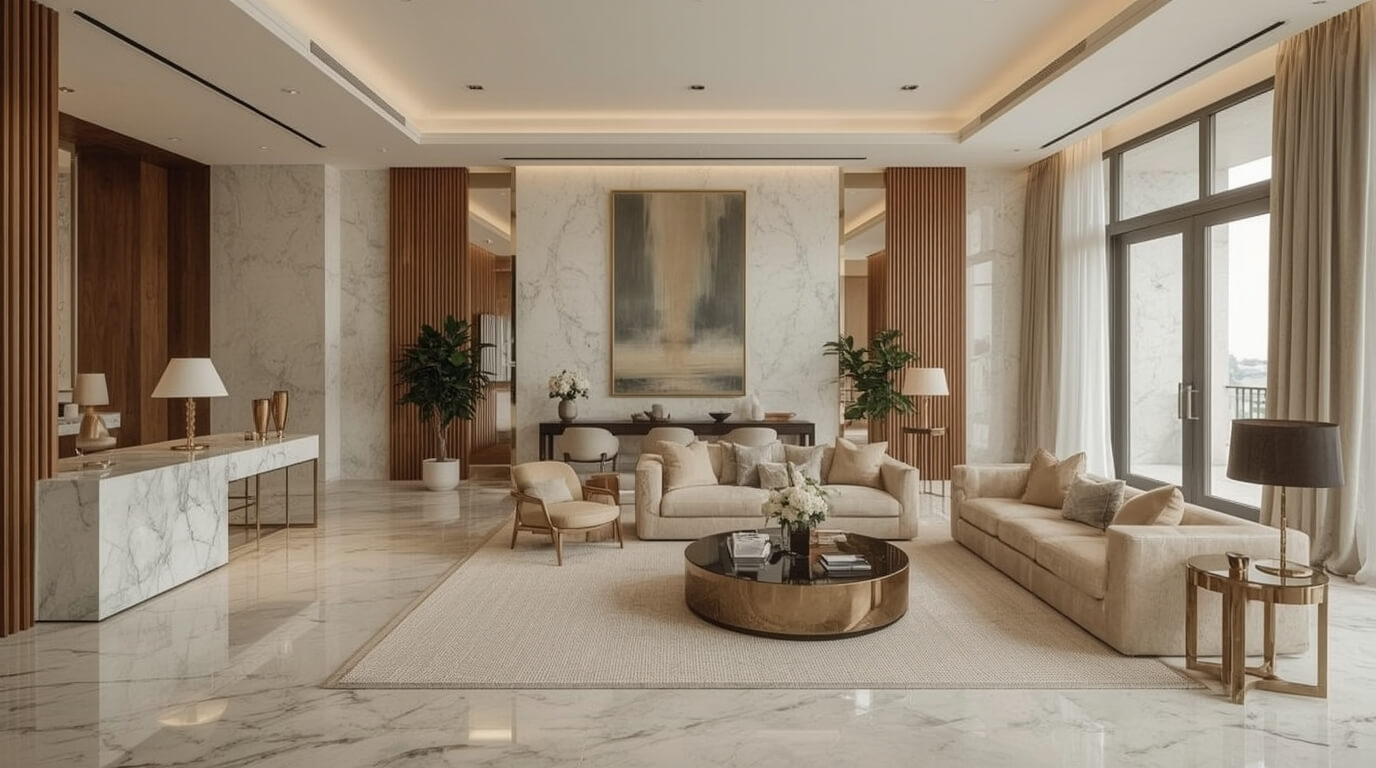
Marble and dolomite integrate seamlessly with traditional moldings, arches, and symmetrical layouts. Rather than feeling dated, stone enhances these spaces by grounding them in material authenticity.
This versatility allows architects to maintain stylistic coherence across generations of design — one of the reasons natural stone remains essential in legacy homes, boutique hotels, and high-end residential developments.
Long-Term Value for Luxury Residential and Hospitality Projects
From a real estate and development standpoint, natural stone adds measurable long-term value.
Luxury buyers associate marble, onyx, and custom stone elements with quality construction and thoughtful design. These materials age gracefully and maintain relevance over time, unlike many surface-driven trends.
For designers and architects working on U.S. luxury projects, specifying natural stone is not only a design choice — it is a strategic one.
Natural Stone as a Design Investment
Luxury interiors are defined by decisions that endure.
Natural stone continues to be specified not because it is traditional, but because it remains unmatched in performance, presence, and perception. In modern interior design, stone does not compete with contemporary aesthetics — it completes them.
Natural stone is not specified in luxury interiors because it is traditional, but because it delivers material depth, architectural presence, and long-term value. In modern design, stone does not compete with minimalism — it completes it.