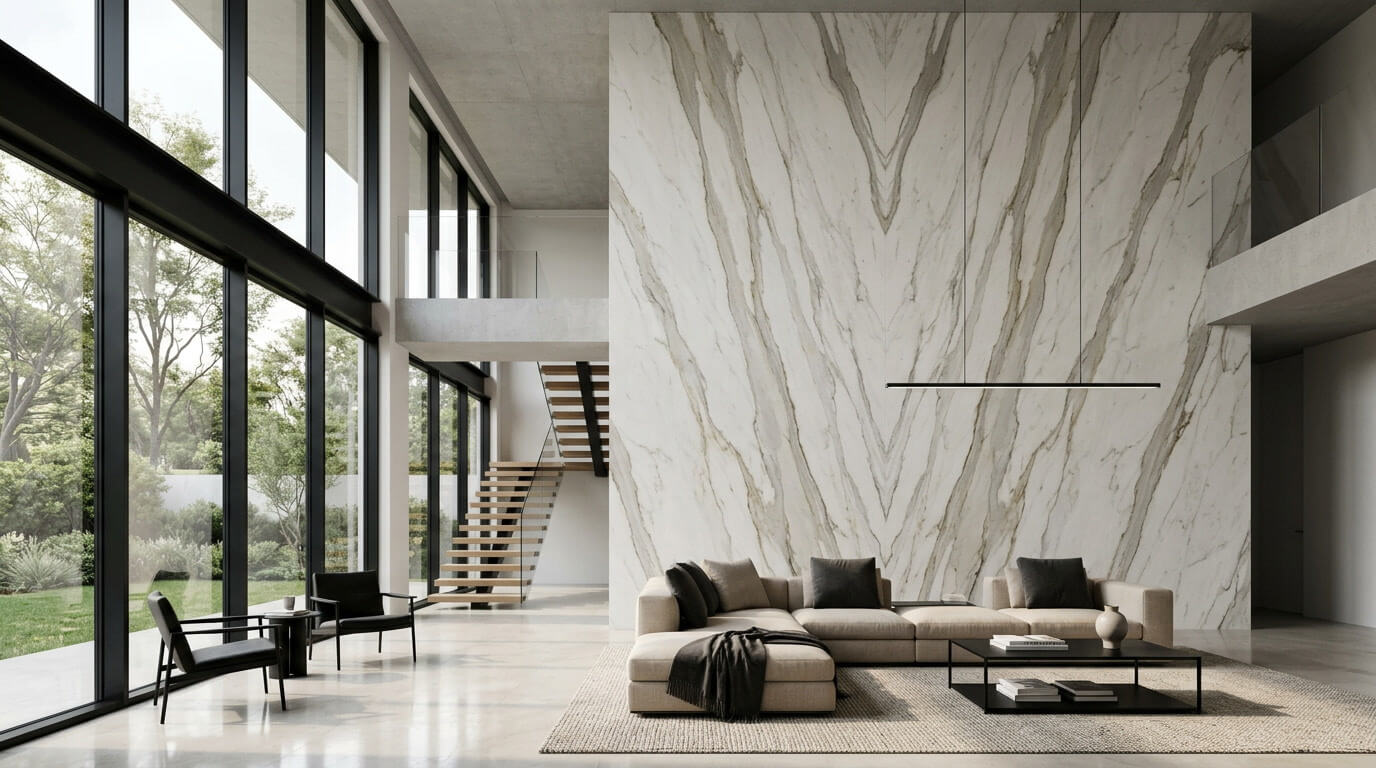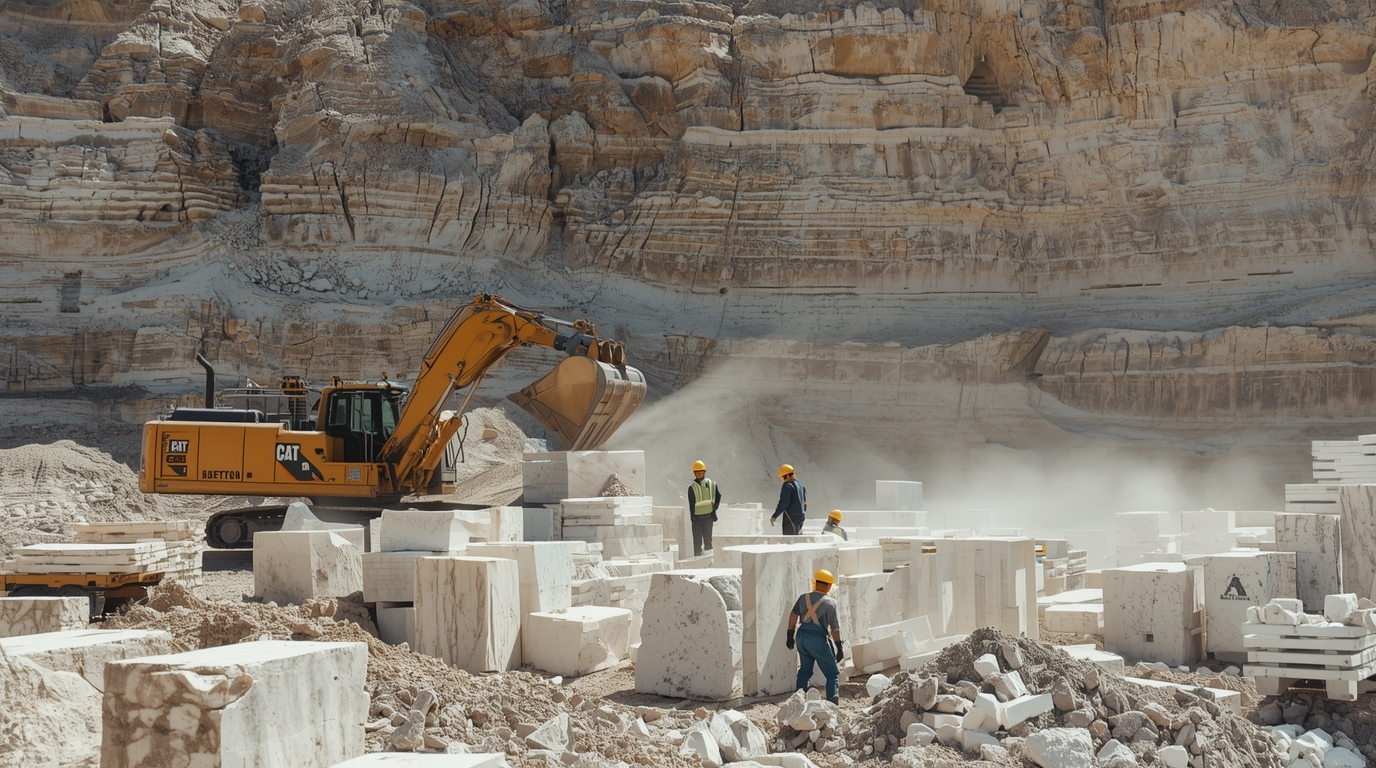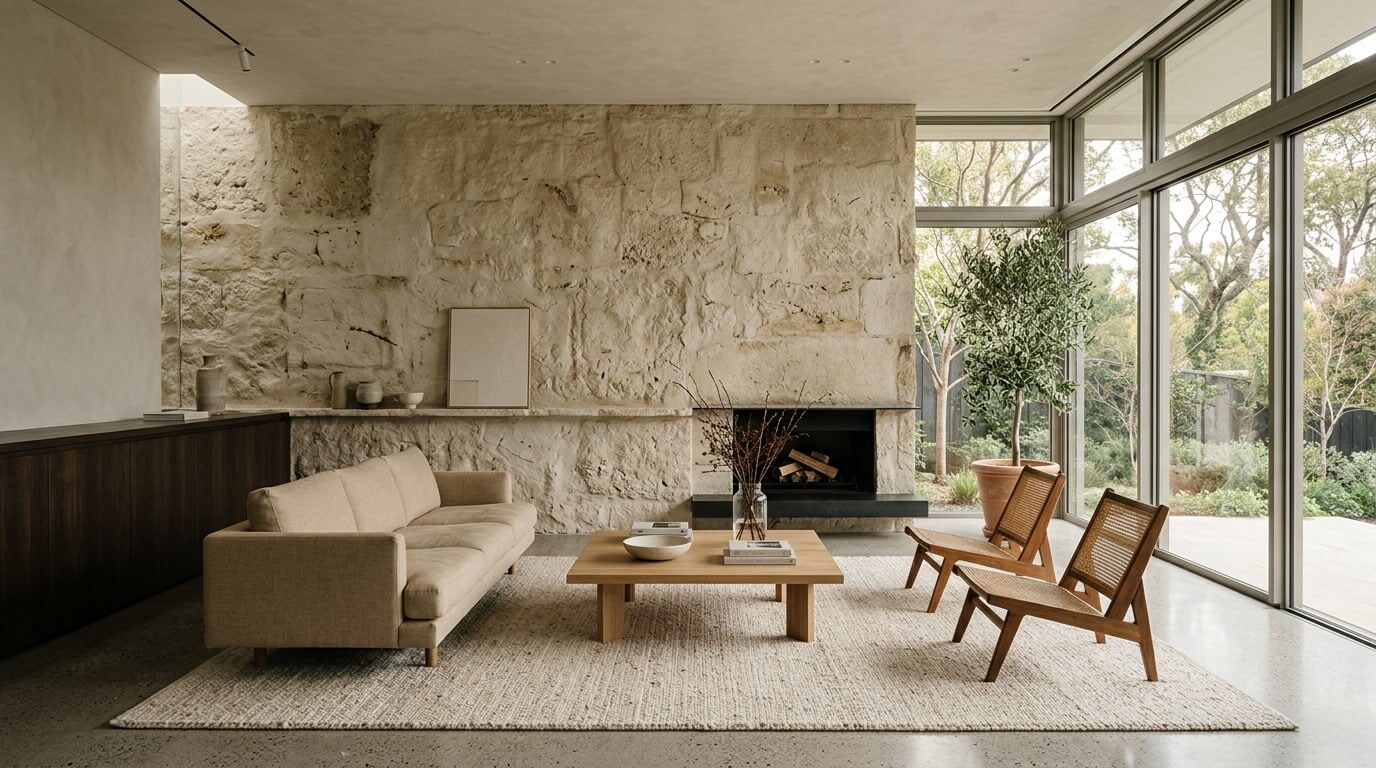
Why Natural Stone Ages Differently from Manufactured Materials
Natural stone does not remain visually static over time. Its surface responds to light, touch, moisture, use, and maintenance, gradually developing a character that manufactured materials are generally designed to resist. In thoughtful interiors, this evolution can become part of the material’s appeal rather than a sign that it has reached the end of its life.
Materials That Record Time
Every natural stone surface begins with a geological history measured in millions of years. Once introduced into an interior, another, much shorter history begins.
Marble may gradually lose some of its original polish in frequently touched or walked areas. Limestone can develop subtle tonal variation. Travertine may reveal its texture more distinctly as the surface matures. Even dense stones can acquire small marks and changes in sheen that reflect how a space is actually used.
These changes are rarely uniform. Areas exposed to sunlight, water, repeated contact, or circulation may evolve differently from protected surfaces.
The result is a material that can quietly record the life of an interior.
Patina Is Different from Damage
Patina and deterioration are not the same thing.
A stain caused by improper care, a structural crack, or severe chemical etching may require attention. Patina refers instead to the gradual surface evolution that occurs through normal use and exposure.
This distinction is especially important with marble, limestone, travertine, and other stones whose visual character is not dependent on maintaining a perfectly uniform factory finish.
A softened polish, minor variation in sheen, or subtle change in tone can give stone greater visual depth. In the right setting, these characteristics make the material feel established rather than worn out.
Understanding that difference also changes how natural stone is specified. The goal does not always need to be preserving the exact appearance of the material on installation day.
Why Manufactured Materials Age Differently
Many manufactured surfaces are engineered around consistency.
Their color, pattern, texture, and finish are controlled during production, and their visual success is often judged by how closely they retain that original appearance. Wear therefore tends to be perceived as a departure from the intended condition.
Natural stone operates differently because variation exists from the beginning.
Veins change direction. Mineral concentrations vary. Fossils, pores, crystalline structures, and tonal shifts may appear across a single piece of material. There is no perfectly uniform original state that every part of the surface must continue to reproduce.
Time simply adds another layer of variation.
This does not automatically make natural stone more durable than every manufactured alternative. Performance depends on the stone, finish, application, installation, and maintenance. Its distinction lies elsewhere: natural stone can accommodate visible change without necessarily losing its material identity.
Finish Influences How Stone Evolves
The way a stone ages is strongly connected to its finish.
Highly polished surfaces make reflections, color saturation, and fine details particularly visible. Changes in gloss can therefore become noticeable relatively quickly in heavily used areas.
Honed stone begins with a softer, more diffuse appearance. Minor changes in sheen may integrate more naturally into its existing visual character.
Brushed, textured, or mechanically worked finishes introduce another relationship with time. Their surfaces already contain deliberate irregularity, allowing subsequent variation to become part of a more complex texture.
There is no universally superior finish. The appropriate choice depends on how the stone will be used and how its future appearance is expected to contribute to the design.
The Role of Touch, Water and Light
Stone does not age in isolation from its environment.
Repeated touch can gradually alter the feel and sheen of a surface. Water can emphasize mineral variation and, particularly in applications such as natural stone bathtubs, affect how the material is perceived over time.
Light creates a different kind of evolution.
As daylight changes throughout the day and across seasons, crystalline structures, veins, translucent areas, and surface textures can appear more or less pronounced. Long-term exposure may also interact with finishes and surrounding materials, changing how the stone is perceived even when the stone itself has changed only subtly.
For this reason, material selection is not simply about choosing a color or pattern. It involves considering how a surface will exist within a particular environment over many years.
Designing for Evolution Rather Than Perfection
The most successful use of natural stone often begins with realistic expectations.
A surface in a quiet residential space will experience a different life from stone used in a hotel lobby, restaurant, bathroom, or heavily circulated interior. The same material may therefore develop very different characteristics depending on context.
Designers can account for this from the beginning by considering stone type, finish, location, exposure, maintenance, and the degree of visual change that is acceptable within the design concept.
This approach does not mean accepting neglect. Natural stone still requires appropriate installation and care.
It means recognizing that preservation and permanence are not necessarily the same as visual immobility.
The Value of Materials That Become Personal
There is a reason centuries-old stone floors, staircases, fireplaces, and architectural surfaces can remain compelling despite showing unmistakable evidence of use.
Their imperfections communicate time.
In contemporary interiors, the same principle can operate on a smaller scale. A stone surface that develops subtle traces of daily life can become increasingly specific to the place it occupies.
Manufactured materials often pursue repeatability. Natural stone offers something fundamentally different: a material whose character existed long before it entered an interior and can continue to evolve long after installation.
For projects intended to endure, that capacity for change can be part of the design itself.
Natural stone does not simply become older. Its surface can develop patina, variation, and traces of use that add another layer to its existing geological character. Choosing stone therefore means considering not only how the material looks when installed, but how it can evolve as part of the architecture.