The Role of Veining in Architectural Stone Design
Veining is more than a decorative characteristic of natural stone. Its direction, scale, contrast, and continuity can influence how architecture is perceived, guiding the eye across surfaces, reinforcing geometry, or introducing movement into otherwise restrained spaces.
Veining as Part of the Architecture
Natural stone is often selected first by color. Yet once the material moves from a small sample into an architectural setting, its veining can become equally important.
A vein establishes direction. It can lead the eye vertically, extend horizontally across a room, emphasize the length of a surface, or interrupt an otherwise rigid composition.
This makes veining fundamentally different from applied decoration. The pattern exists within the material itself, but its architectural effect depends on how the stone is selected, oriented, cut, and positioned.
In expressive stones, these decisions can influence the entire visual structure of a space.
Direction Changes Spatial Perception
The orientation of veining can subtly alter how architectural proportions are perceived.
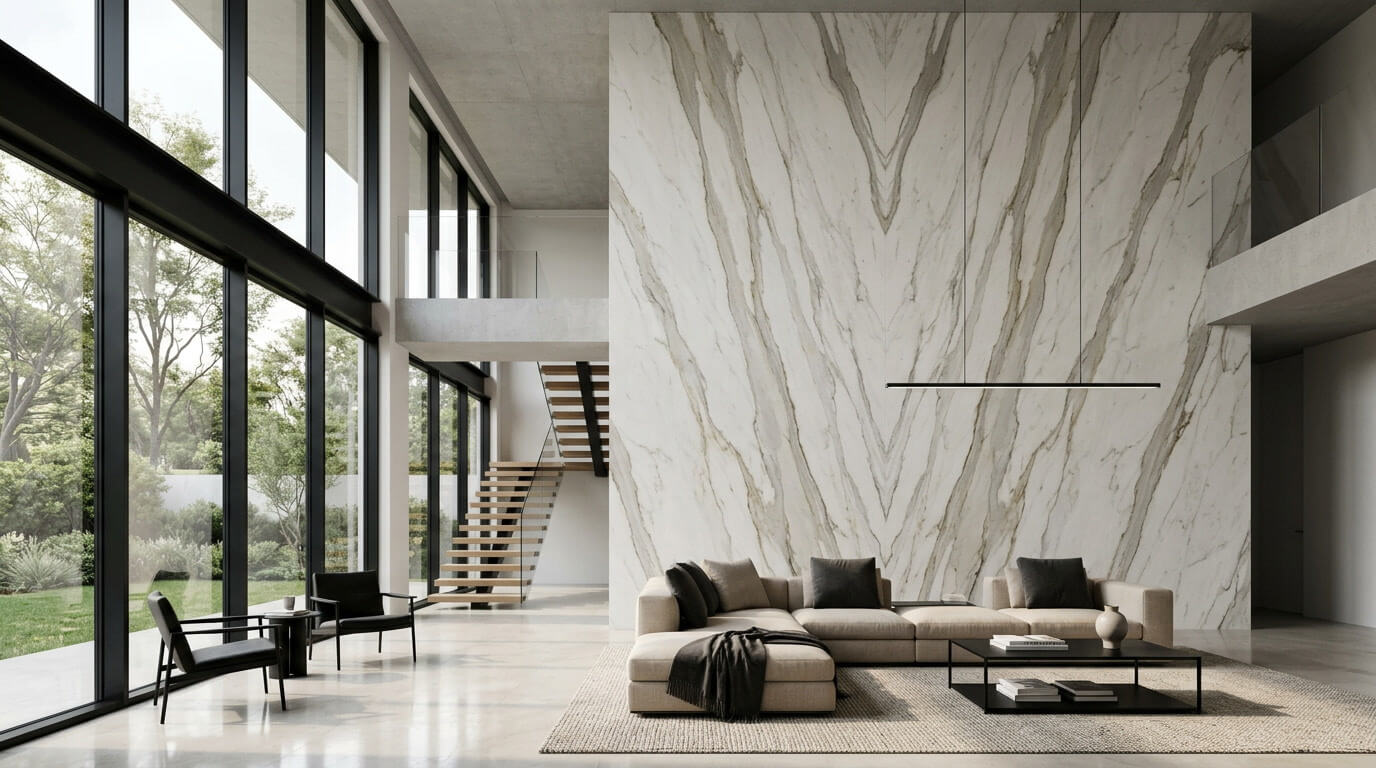
Strong vertical movement tends to reinforce height. On a tall fireplace surround or full-height wall, upward-running veins can make the surface feel even more monumental.
Horizontal movement has a different effect. Long veins extending across a surface can emphasize width and visually connect separate architectural elements.
Diagonal veins introduce energy. Rather than following the geometry of the room, they move across it, creating tension between the natural structure of the stone and the controlled lines of the architecture.
None of these approaches is inherently preferable. The important question is whether the movement of the stone supports the intended character of the space.
Scale Matters
A stone that appears quiet in a small sample can become remarkably expressive across a large surface.
This is one reason material selection and evaluation cannot rely exclusively on small samples.
Large-format architectural applications reveal relationships between veins that may not be visible in a fragment. Fine veining can create a soft visual texture when seen across several feet, while broad mineral formations can become dominant compositional elements.
The scale of the room matters as well.
In intimate interiors, dramatic movement can command immediate attention. In expansive spaces, the same stone may require greater scale and contrast to maintain its visual presence.
Understanding this relationship allows stone to participate in the architecture rather than simply cover it.
Continuity Creates Visual Rhythm
Large architectural stone elements can continue naturally from one section to another, producing a sense of uninterrupted movement.
Veins can continue naturally from one section to another, producing a sense of uninterrupted movement. They can also be deliberately mirrored or arranged to create symmetry.
Bookmatching is perhaps the most recognizable example. Two adjoining stone faces are opened like pages of a book, allowing their geological patterns to reflect one another.
The result can be highly dramatic, but symmetry is not always the objective.
In quieter interiors, carefully considered continuity without perfect mirroring may feel more natural. The eye follows the material across the composition without immediately recognizing a deliberate pattern.
Both approaches require thinking beyond individual pieces. The stone must be considered as a larger visual field.
Strong Veining and Quiet Architecture
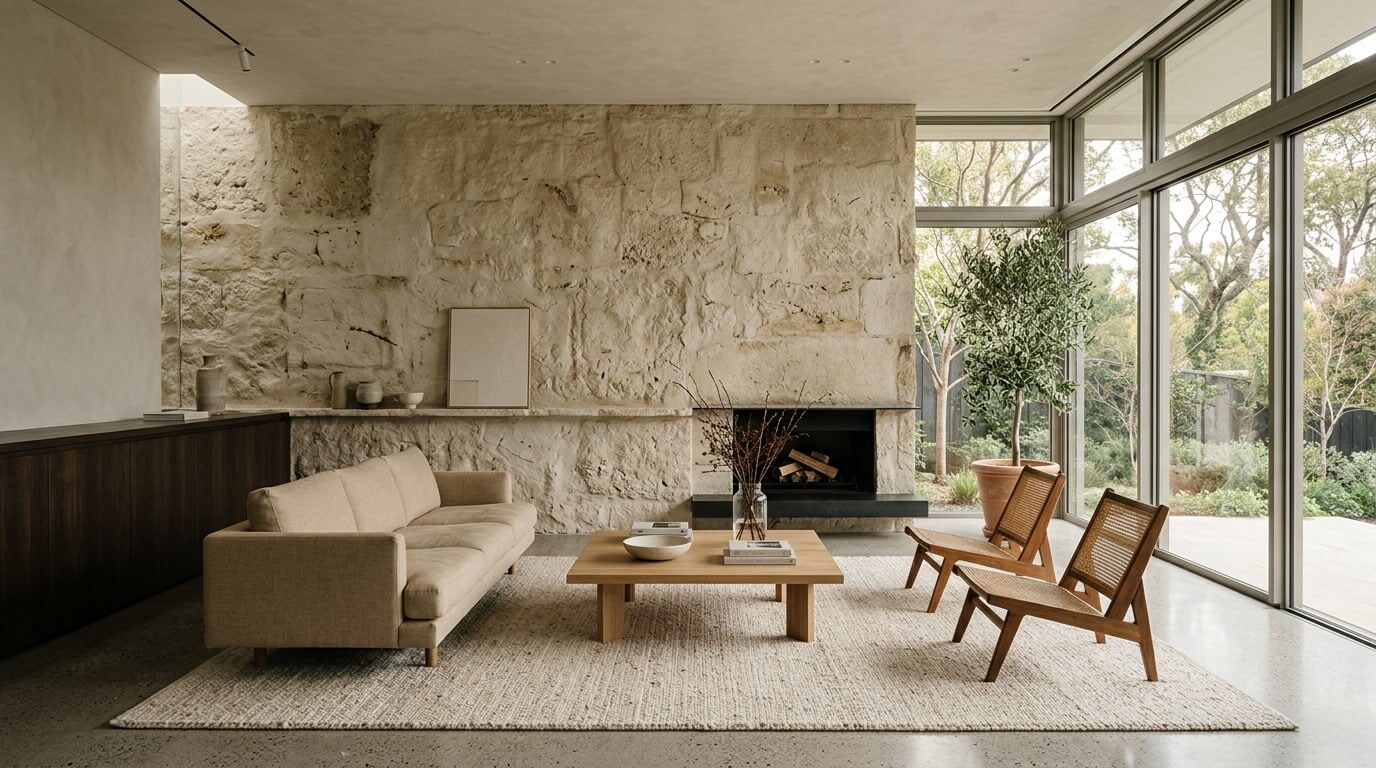
Expressive stone often works particularly well when the surrounding architecture is restrained.
Clean lines, limited material palettes, and simple volumes give complex veining room to exist without visual competition.
In these settings, a strongly veined surface can become the primary source of movement.
The opposite relationship can also be effective. Stone with subtle, low-contrast veining can support architecture that already contains significant geometry, furniture, artwork, or texture.
The objective is not necessarily to find the most dramatic material. It is to understand how much visual information the architecture already contains and determine what role the stone should play within it.
Light Changes the Reading of Veining
Veining is not perceived independently of light.
Direct daylight can increase contrast and reveal fine mineral structures that appear subdued under diffuse illumination. Grazing light can emphasize subtle changes in texture, while softer light may visually compress differences between the stone’s base color and its veins.
Polished surfaces add reflection to this relationship. Honed finishes tend to produce a quieter reading of the same geological pattern.
The orientation of a stone surface relative to windows and artificial lighting therefore affects more than brightness. It can change which aspects of the material become visually dominant.
A stone selected under one lighting condition may communicate very differently once installed in its architectural environment.
Designing with Geological Movement
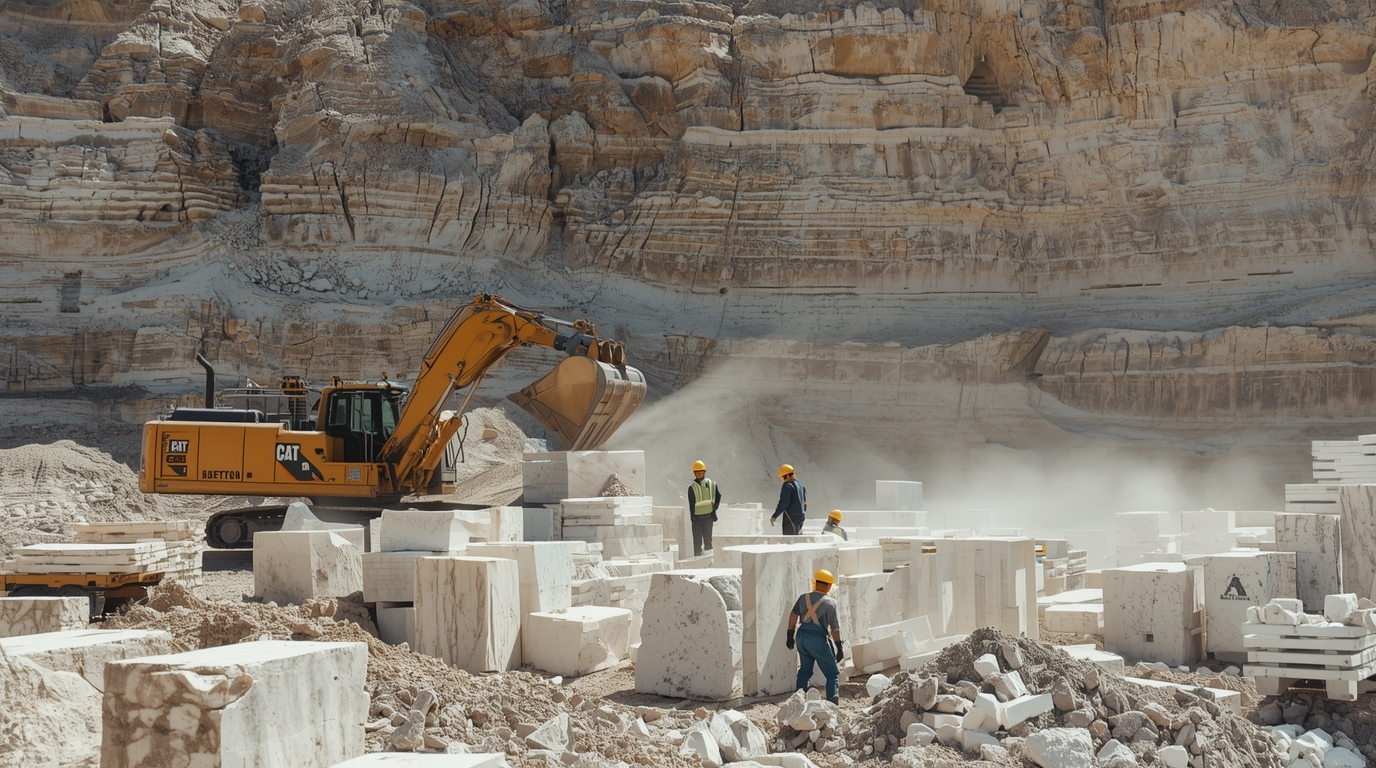
Every block of natural stone contains a composition that existed before the architectural project.
Design does not create that movement. It decides how to work with it.
This distinction is important. Rather than treating veining as a pattern that can be repeated indefinitely, architects and designers can respond to the particular geological structure of the available material.
Certain areas may deserve prominence. Others may provide transitions. Vein direction can reinforce an architectural axis or intentionally move against it.
This process makes natural stone selection partly an act of composition.
The architecture establishes order, while the material introduces variation.
When the Material Defines the Space
In some interiors, stone remains deliberately quiet. In others, its geological movement becomes one of the defining elements of the architecture.
Both approaches can be successful.
What matters is intentionality.
Veining should not be considered only after the material has been chosen. Direction, scale, continuity, finish, and light all influence how the stone will ultimately be experienced.
When these elements are considered together, natural stone moves beyond surface treatment. Its geological structure becomes part of the spatial composition itself.
Stone veining influences more than appearance. Direction can reinforce architectural geometry, scale determines visual presence, and continuity creates rhythm across larger surfaces. The most successful applications consider the geological movement of the stone as part of the composition from the beginning.