Why Stone Looks Different in Natural and Artificial Light
Natural stone rarely looks exactly the same throughout the day. A marble surface that appears cool and restrained in morning daylight may reveal warmer tones under evening illumination. Light influences how we perceive color, veining, texture, and depth, making illumination an essential part of architectural material design.
Stone Is Never Seen Without Light
Natural stone has a physical character defined by its mineral composition, geological structure, and surface finish. Yet the way we experience those characteristics depends heavily on the surrounding light.
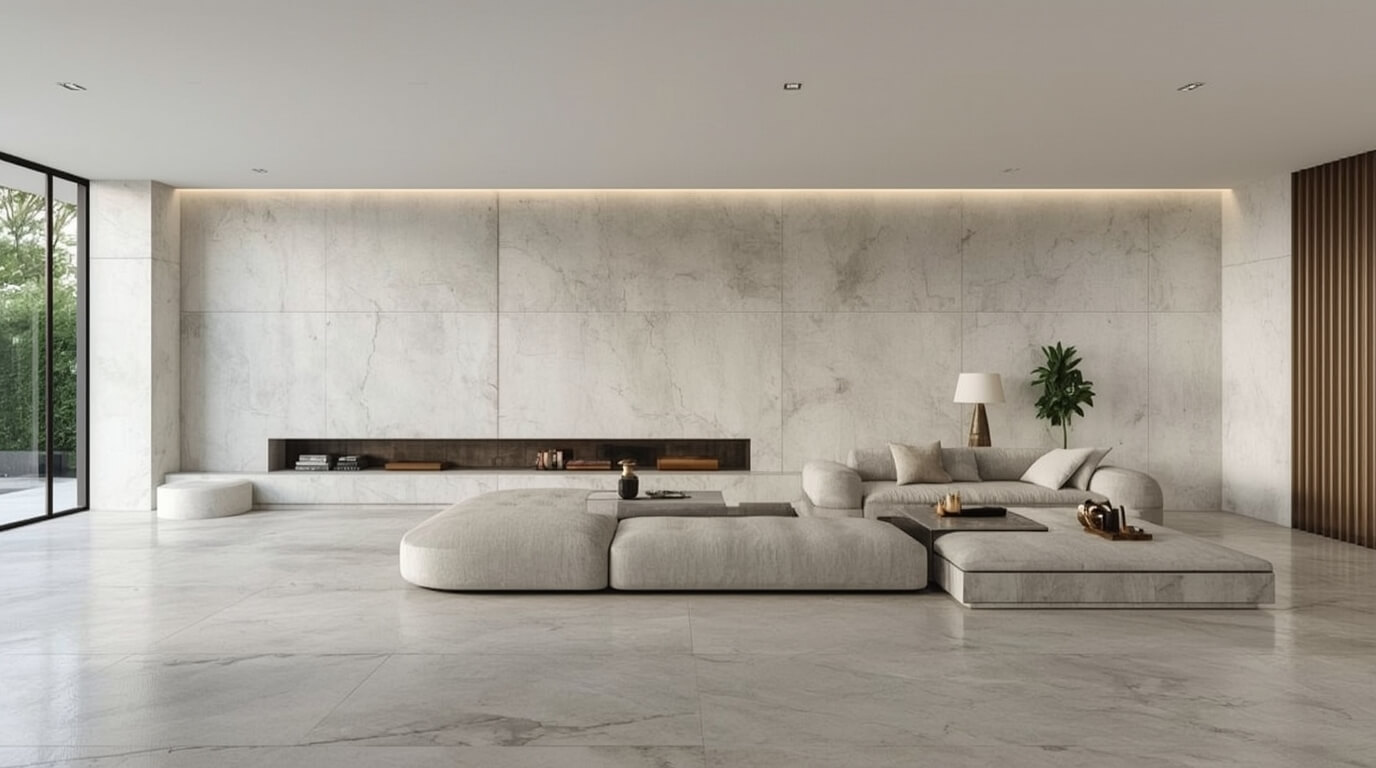
A pale marble wall can appear almost white in strong daylight, while the same surface may take on a softer, creamier appearance beneath warm artificial lighting.
Dark stones behave differently. Their veining may become more pronounced under directional illumination, while subtle mineral variations can disappear in low-contrast environments.
The material itself may remain unchanged. What changes is the relationship between the stone, the light source, and the observer.
For architects and interior designers, this relationship deserves attention long before the final lighting scheme is established.
Natural Daylight Reveals Changing Character
Daylight is dynamic.
Its intensity, direction, and spectral composition change throughout the day. Morning light often produces a different visual atmosphere from direct midday sun or the softer illumination of late afternoon.
These variations influence how natural stone is perceived.
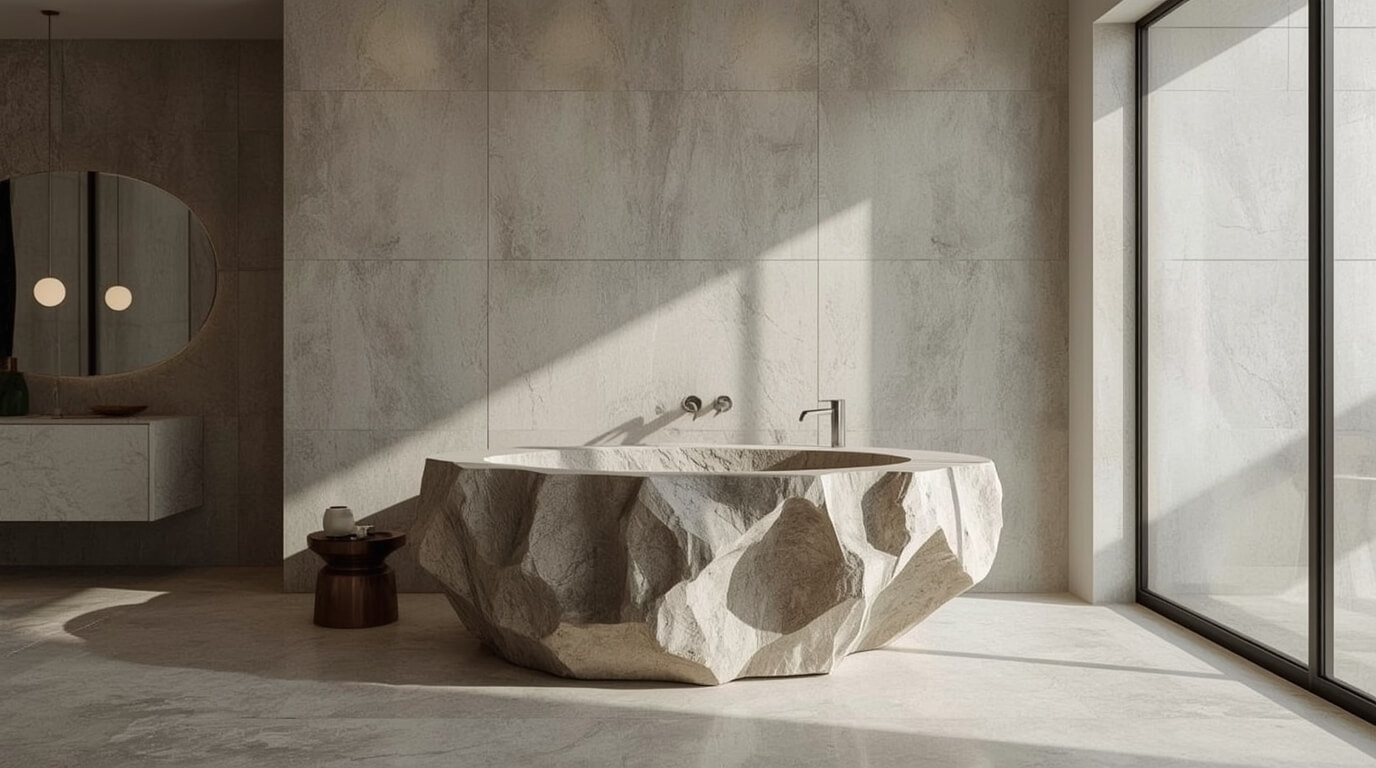
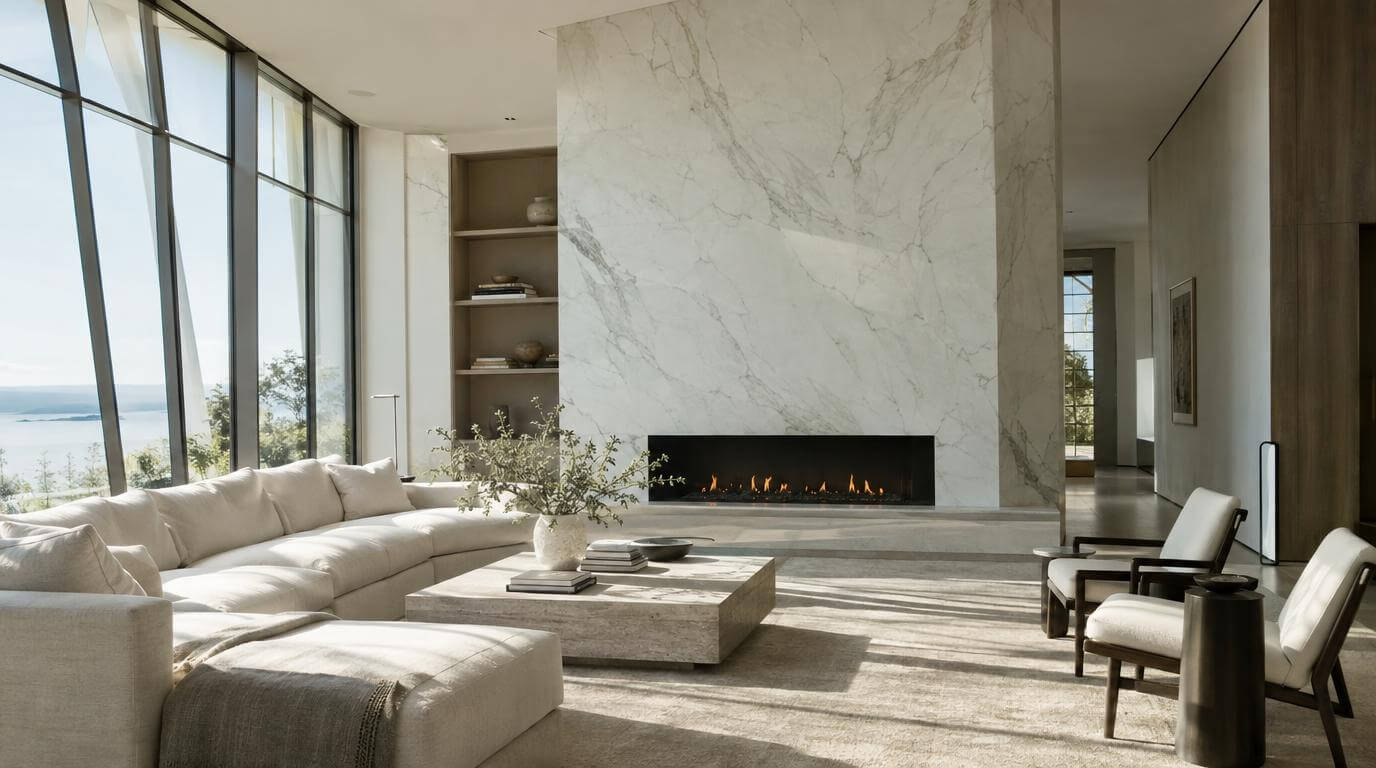
In spaces with large windows, sunlight can reveal fine mineral structures and variations that remain less noticeable under diffuse lighting. Strong directional light can also emphasize surface texture, particularly on honed, brushed, or naturally textured finishes.
As the sun moves, shadows shift across the stone, creating an evolving relationship between the material and the architecture.
A surface that feels visually quiet in the morning may become one of the most expressive elements of the room later in the day.
How Artificial Lighting Changes Stone Color
Artificial lighting introduces a different level of control.
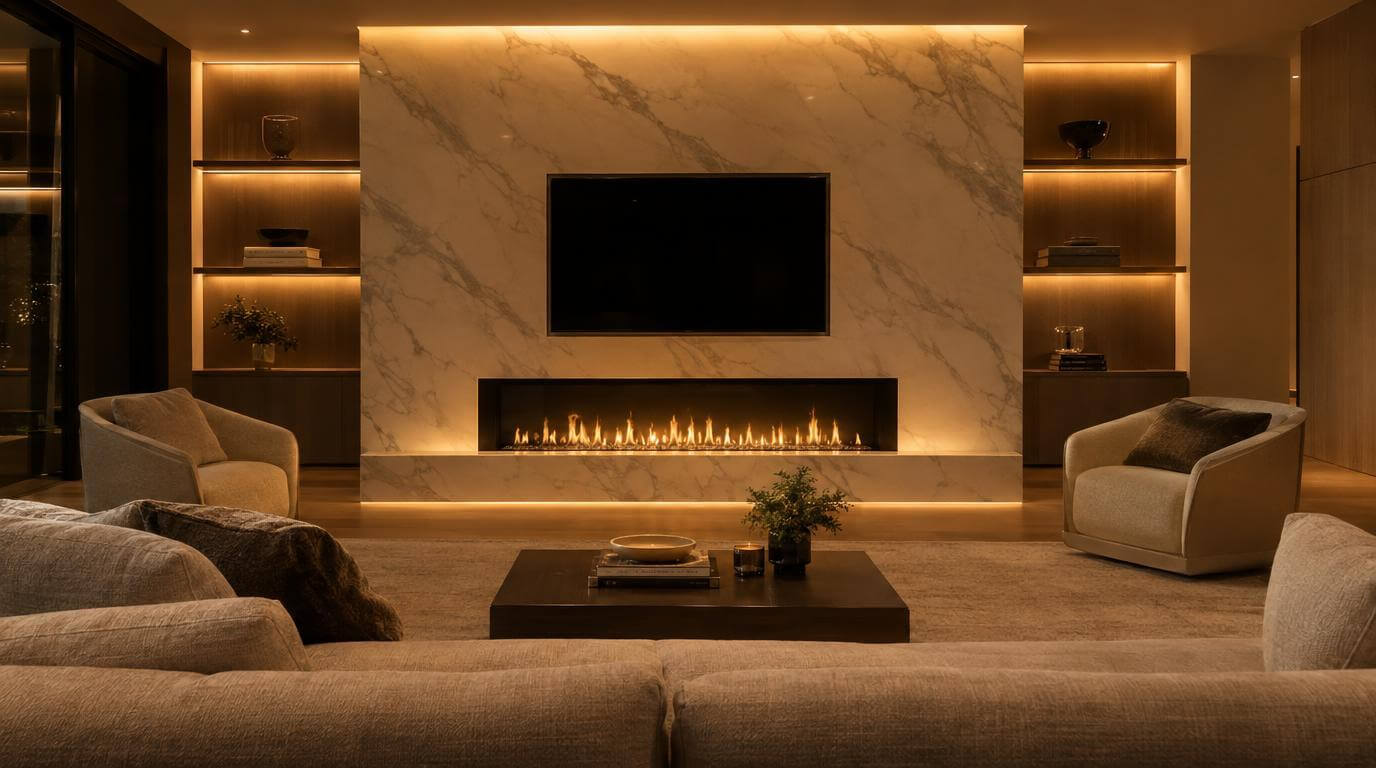
Color temperature is one of the most noticeable factors. Warm lighting, commonly associated with residential interiors and hospitality environments, can emphasize beige, gold, and cream undertones.
Cooler lighting may reinforce the gray and blue characteristics of certain stones, creating a more restrained appearance.
However, color temperature alone does not determine the result.
The spectral quality and color-rendering performance of a light source influence how accurately different mineral colors are perceived. Two fixtures with similar color temperatures can produce noticeably different results on the same stone.
This is particularly relevant for materials with complex veining or multiple mineral tones.
Lighting should therefore be evaluated against the actual stone rather than selected exclusively from technical specifications.
Polished and Honed Surfaces Respond Differently
Surface finish changes the interaction between stone and light.
Polished stone produces stronger, more directional reflections. This can enhance perceived color saturation and create a sense of depth, especially in darker or highly patterned materials.
However, reflections from windows and fixtures can also obscure parts of the natural pattern.
Honed stone scatters reflected light more diffusely. Its softer appearance often allows veining and tonal variation to remain visible without the visual intensity associated with high-gloss surfaces.
Textured finishes introduce another dimension.
When light strikes an uneven surface at a shallow angle, small ridges, pores, and variations create shadows that emphasize the physical structure of the material.
The same stone can therefore communicate very different architectural qualities depending on its finish and illumination.
Translucency and the Perception of Depth
Some natural stones interact with light in ways that extend beyond surface reflection.
Certain onyx varieties and selected translucent marbles allow light to penetrate the material to varying degrees. Depending on thickness, mineral composition, and internal structure, this can reveal layers and formations that are less apparent under conventional front lighting.
Backlighting can make these characteristics especially visible.
Mineral bands, crystalline areas, and natural variations may appear to glow from within, transforming the stone into an illuminated architectural element.
Not every stone is suitable for this effect, and translucency can vary significantly even within the same material category.
Nevertheless, the principle illustrates an important distinction: natural stone is not always experienced as a flat surface. Under appropriate lighting, its internal geological structure can become part of the visual composition.
Why Scale and Placement Matter
Lighting conditions observed on a small sample do not always represent the appearance of a completed architectural surface.
A sample examined beneath showroom lighting may reveal certain colors and patterns, while a full-height installation near expansive windows can produce an entirely different impression.
Scale changes the distribution of reflections, shadows, and contrast.
Placement is equally important.
A stone wall facing a window receives light differently from a wall positioned perpendicular to it. A horizontal surface interacts with overhead illumination differently from a vertical architectural feature.
These relationships can affect whether veining appears dominant, subtle, continuous, or fragmented.
Evaluating material within its intended spatial context helps reduce the gap between initial expectations and the finished environment.
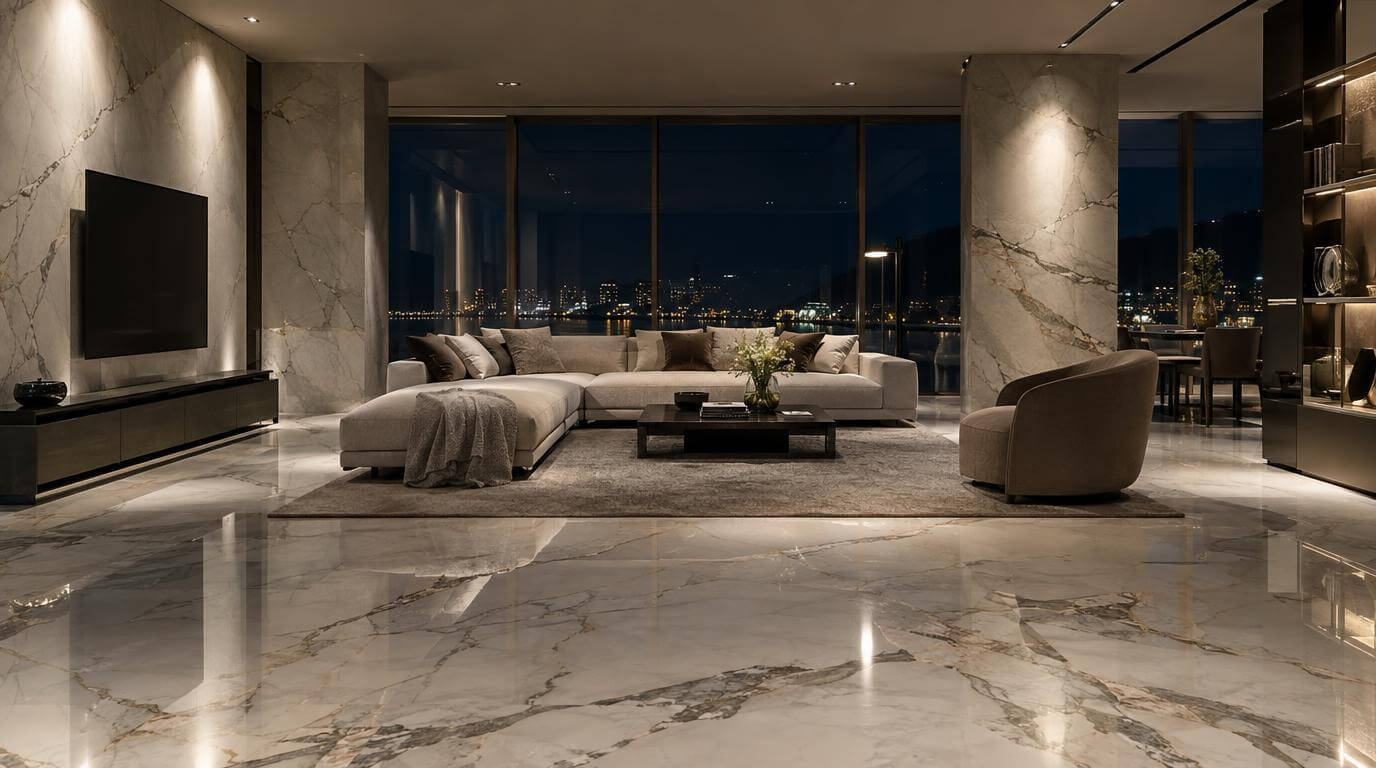
Designing for Day and Night
Successful architectural lighting considers how a space changes between daylight and evening use.
During the day, natural stone may be defined by sunlight, reflections, and the changing atmosphere outside.
At night, artificial illumination establishes a more controlled visual environment.
Rather than attempting to reproduce identical appearances, designers can use these differences intentionally.
A restrained limestone interior may feel bright and open during daylight hours, then become warmer and more intimate under carefully positioned evening lighting.
A dramatic marble feature can transition from a quiet architectural surface into a stronger visual focal point.
The objective is not to eliminate variation. It is to ensure that the material remains visually coherent across the different conditions in which the space will be experienced.
Light as Part of Material Character
Natural stone is often discussed through its color, origin, pattern, and finish. Yet none of these characteristics is experienced independently of illumination.
Light determines which details become visible, which colors feel dominant, and how the material relates to surrounding architecture.
For this reason, stone and lighting should not be treated as entirely separate design decisions.
The most compelling interiors recognize that material character is not fixed to a single appearance.
It emerges through the interaction of geology, surface, architecture, and light.
Natural and artificial lighting can significantly change how stone color, veining, texture, and depth are perceived. Daylight introduces movement and variation, while artificial lighting provides greater control over atmosphere and visual emphasis. Evaluating stone under realistic lighting conditions helps designers understand how the material will contribute to a space throughout the day.